Black’s Beach
La Jolla, San Diego · USA

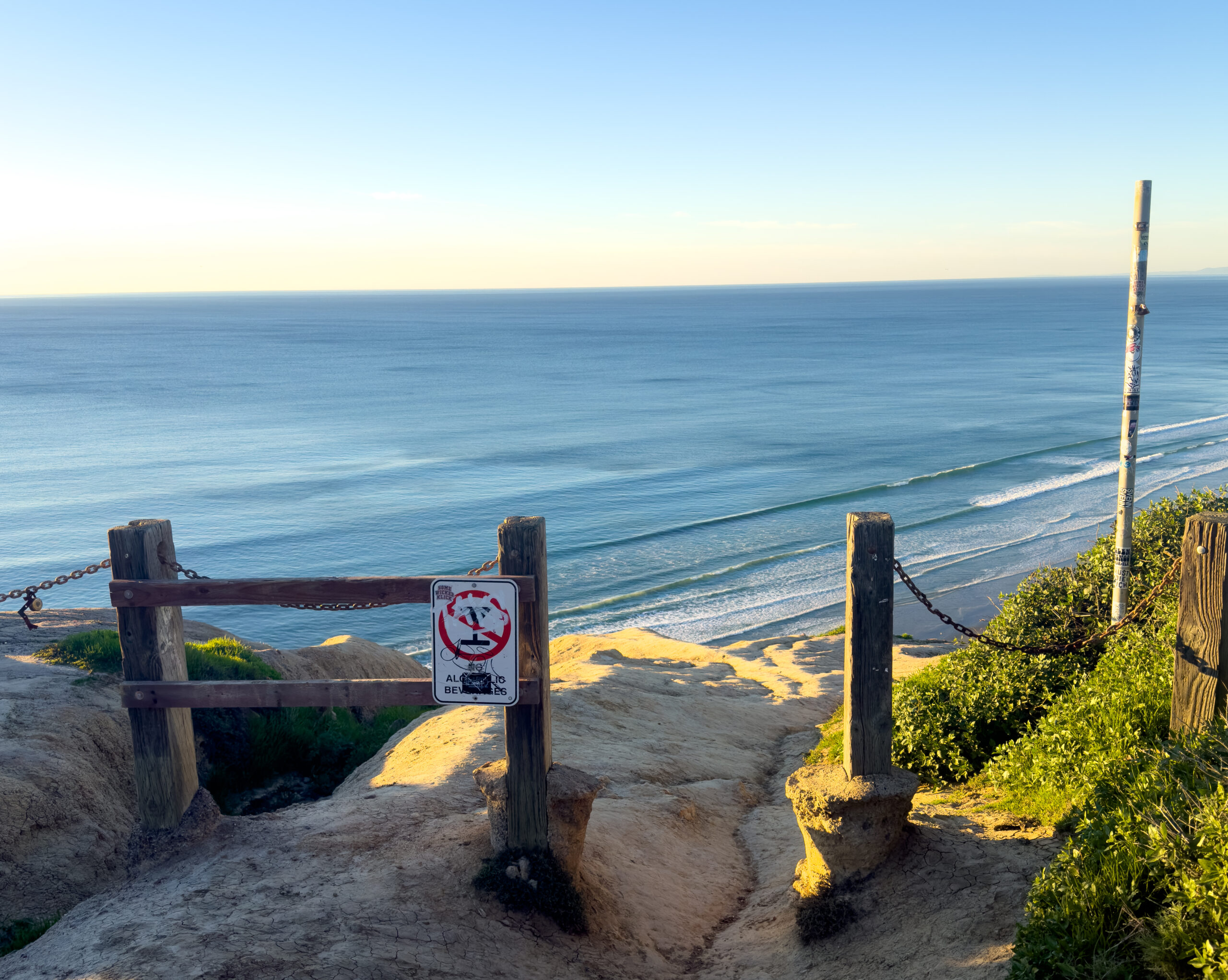
Black’s Beach — La Jolla, San Diego
Black’s Beach, tucked just below La Jolla near San Diego, offers one of the most dramatic coastlines I’ve encountered. Sheer cliffs rise straight from the sand, and on windy days paragliders peel off the bluffs above, floating down in long, unhurried arcs. Their elegance is a quiet counterpoint to the descent you’re about to make.
Getting down is manageable, but it demands attention. Each step carries a flicker of adrenaline, the kind that sharpens your senses and makes arrival feel earned. When you finally reach the beach, the reward is immediate. Above the sand, the trails double as both cruising ground and hike, offering moments of beauty between moments of possibility. Pause when the breeze shifts. The air fills with California sagebrush and the resinous scent of the park’s namesake Torrey pine. It’s sensory, subtle, and unmistakably San Diego.
Black’s Beach
Best Time to Visit
Black’s Beach has a significant advantage over most destinations in this guide: San Diego’s weather makes it viable year-round. The cliffs provide shelter, the sun is reliable, and the Pacific stays swimmable even in months when the rest of the country has long since retreated indoors.
That said, the crowd dynamic does shift with the seasons. Summer draws the largest numbers, particularly on weekends, when the gay contingent is most visible and the beach has the kind of social energy that comes from everyone arriving with the same general agenda. If that’s what you’re after, June through August delivers. Arrive early: the Gliderport lot fills up fast on a warm Saturday.
San Diego locals have a name for May and early June: May Gray and June Gloom. During this time of year, the marine layer rolls in off the Pacific and can keep the coast cold and overcast all day, or burn off by noon, or return by two.
September and October are what San Diego locals call their real summer. The tourist volume drops, the weather holds, and the beach takes on a more relaxed character without losing the warmth. This is arguably the sweet spot: good conditions, a crowd that’s there on purpose, and parking that doesn’t require a strategy.
Spring is quieter still, pleasant enough for a day on the sand, though the scene is thinner. Winter is for the committed and the surfers, neither of whom need much guidance here.
San Diego International Airport (SAN) sits almost comically close to the city. Downtown is minutes away, and the drive north to Torrey Pines is straightforward and scenic. It’s one of those rare airports that makes a short, spontaneous weekend feel genuinely easy.
Rideshare is plentiful and relatively affordable, with Uber and Lyft tending to under-index on price compared to other major cities. That said, a rental car buys you flexibility. Having your own wheels makes it easier to move between beach, canyon, and cocktail without overthinking logistics.
The beach is free. Parking at the Gliderport is free. If you access via Torrey Pines State Natural Reserve, a day-use parking fee applies. Most visitors use the Gliderport route and pay nothing.
Pack as you would for any beach-forward escape: sun protection, layers for cooler evenings, and a healthy respect for the Pacific. One important note: the trail down can be steep and occasionally slippery. Footwear with real grip is strongly recommended. Sturdy sandals like Chacos or Tevas, or an old pair of tennis shoes, will serve you considerably better than anything thin or slick.
Black’s Beach
Technically tucked into La Jolla, Black’s Beach functions as San Diego’s gay beach in both practice and spirit. Backed by the campus of UC San Diego, the shoreline unfurls beneath dramatic cliffs that feel equal parts invitation and warning.
Most arrivals begin near the Gliderport, where a narrow path tips downward. The descent focuses the mind. Then the trail releases you onto the sand and the coast opens up, rugged and wide.
Black’s Beach sits about 25 minutes north of downtown San Diego. The most popular route down is the Gliderport Trail: head to Torrey Pines Gliderport, turn right as you enter the parking lot, and drive to the far north end. You’ll find a break in the railing where the path begins. Free parking is available in the dirt lot.
The descent takes about ten to fifteen minutes and rewards a patient pace. Footing can be loose near the bottom, so take your time and wear shoes with real grip. The Cliffhanger Cafe at the Gliderport is a natural stop before you head down: casual food, good coffee, and a front-row view of the paragliders peeling off the bluffs above you.
Once you reach the sand, turn right and keep walking north. The beach is clothing-optional along its length, but the gay crowd concentrates at the far northern end. The first stretch after the trail tends to be a more mixed scene. Head north until you see your tribe.
One note worth keeping in mind: alcohol is technically prohibited on the beach, and rangers do patrol and ticket. A discreet approach is advisable. Stingrays are a known presence near the waterline: shuffle your feet as you enter the water rather than stepping, and you’ll avoid most encounters.
You may catch some light action along the sand, but the real scene lives at the Bluff. Look for a trail leading up into a lightly wooded area above the beach. If you’re unsure you’re in the right place, watch for someone casually posted near the entrance: a reliable harbinger for the trail ahead.
Once you climb the initial rise, the trail unfolds mostly out-and-back, with a few side shoots for the curious. Just to the right of the trail’s entrance, a small grove of bamboo offers a more compact and opportunistic alternative for those less inclined toward the full commitment of the trail.
A practical note: rattlesnakes are rare but are occasionally spotted on the bluff. Stay on the path, watch where you step (especially in the brush), and you’ll be fine.
“Each step carries a flicker of adrenaline, the kind that sharpens your senses and makes arrival feel earned.”
Where to Stay
San Diego is a genuinely easy city to navigate, and where you stay matters less than it might elsewhere. Downtown and Little Italy are the natural home bases: well-served by rideshare, about ten minutes from both Hillcrest and the airport, and lined with chain hotels that tend to be well-priced and reliable. Most major brands are represented. Book what you know and spend the savings on the beach day.
Frequently Asked Questions
-
Is Black’s Beach gay-friendly?
Black’s Beach has functioned as San Diego’s de facto gay beach for decades. The clothing-optional section draws a consistent gay crowd, particularly on summer and fall weekends, and the culture is relaxed and welcoming. Discretion is entirely optional.
-
Is Black’s Beach a nude beach?
Yes, in part. The northern section of Black’s Beach, managed by California State Parks, is clothing-optional and where nudity is both common and unremarkable. The southern section, managed by the City of San Diego, prohibits nudity. In practice, the clothing-optional area is where the gay scene concentrates.
-
How do I get to Black’s Beach?
Fly into San Diego International Airport (SAN) and drive or rideshare about 25 minutes north to Torrey Pines. The most popular access route is via the Torrey Pines Gliderport Trail: head to the Gliderport, turn right into the parking lot, and drive to the far north end. Look for a break in the railing where the trail begins. Free parking is available in the Gliderport dirt lot.
-
Is there a fee to visit Black’s Beach?
The Gliderport trail and parking are free. If you access the beach via Torrey Pines State Natural Reserve, a day-use parking fee applies. Most visitors use the Gliderport route.
-
When is the best time to visit Black’s Beach?
September and October are the sweet spot. San Diego’s weather holds warm and reliable well into fall, the summer tourist volume drops, and the beach takes on a more relaxed character without losing the crowd that makes it worth visiting. Summer delivers the most social energy if that’s the priority, but the parking competition on weekends is real.
-
Is it safe to swim at Black’s Beach?
The water is beautiful but deserves respect. Black’s Beach sits above Scripps Canyon, an underwater canyon that focuses wave energy and produces strong surf. The breaks here are considered advanced and rip currents are possible. Most visitors are better off enjoying the Pacific from the sand. If you do go in, shuffle your feet at the waterline to avoid disturbing any stingrays in the shallows.